


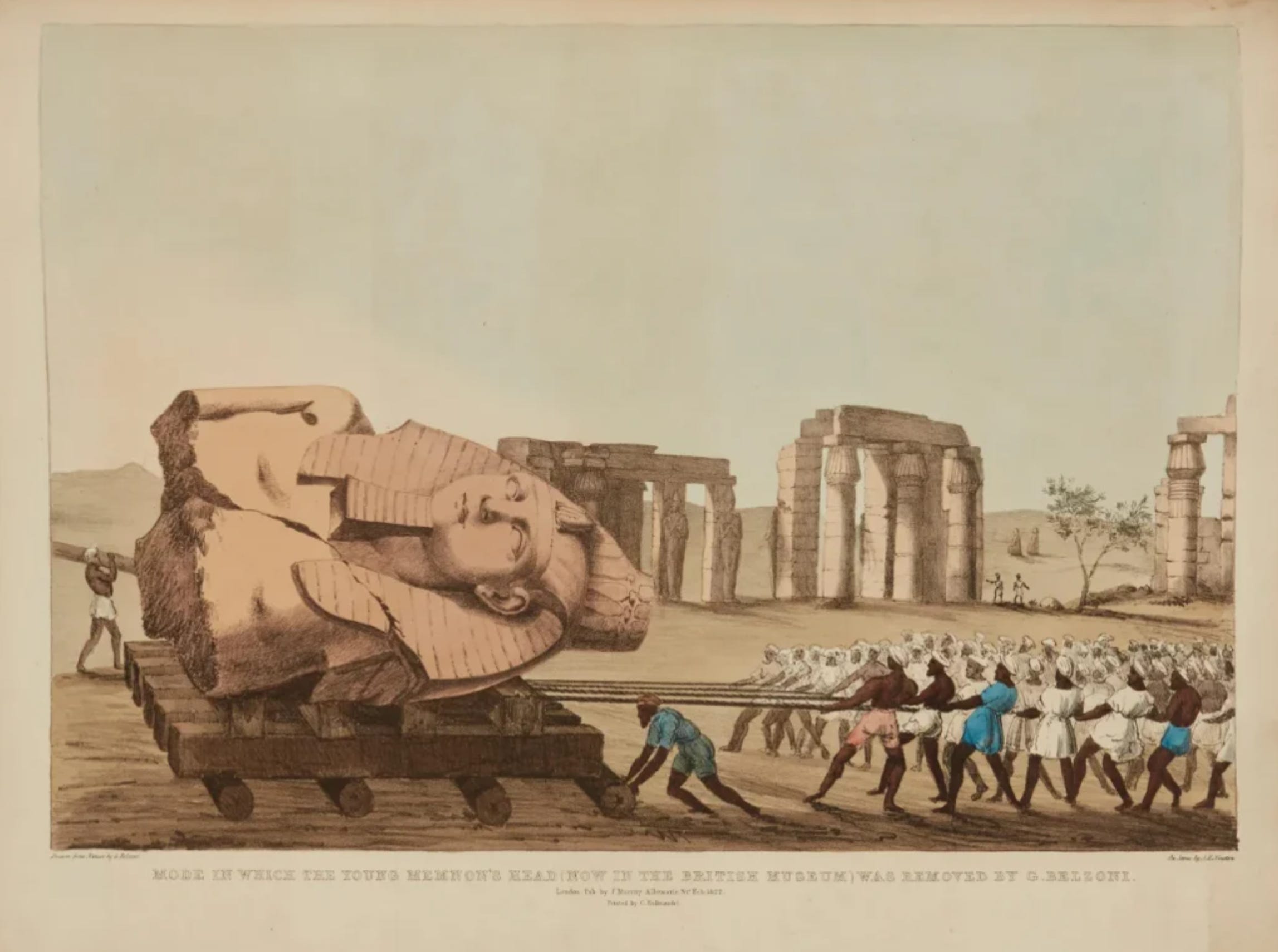
More than 3,000 years ago, Ramesses II reigned over an empire of three to four million people and believed himself to be a god. An obsessive builder, he filled the Nile Valley with new temples, obelisks, and statues — all emblazoned with his cartouche or made in his image — by wielding a brutal corvée system of forced labor over immigrants, peasants, farmers, and prisoners of war.
In 1798, Napoleon’s troops tried to steal a fallen statue of Ramesses II from the pharaoh’s mortuary temple in Thebes, but even the disembodied head and torso were too massive to cart all the way back to France.
In 1817, Percy Bysshe Shelley was just 24 years old when he heard the statue was on its way to the British Museum. Inspired by the “shattered visage” of a pharaoh who thought his kingdom would last forever, Shelley wrote one of the most quoted poems of the Romantic era — “Ozymandias,” after the Greek name for Ramesses II.
Reading it always gives me chills.
Ozymandias
I met a traveller from an antique land,
Who said—“Two vast and trunkless legs of stone
Stand in the desert. . . . Near them, on the sand,
Half sunk a shattered visage lies, whose frown,
And wrinkled lip, and sneer of cold command,
Tell that its sculptor well those passions read
Which yet survive, stamped on these lifeless things,
The hand that mocked them, and the heart that fed;
And on the pedestal, these words appear:
My name is Ozymandias, King of Kings;
Look on my Works, ye Mighty, and despair!”
Nothing beside remains. Round the decay
Of that colossal Wreck, boundless and bare
The lone and level sands stretch far away.
In the 21st century, capitalism has replaced our kings with centibillionaires — one of whom is already attempting to reach the stars by standing on the backs of his wage slaves. But as good science fiction often asks:
What if we extrapolate that by a few hundred years?
Last year, Bungie, the Seattle-based video game studio behind the Halo and Destiny franchises, shared a “reveal cinematic” (above) for a new extraction shooter based on its old Marathon trilogy from the ‘90s. Marketing aside, the cinematic is a stunning sci-fi short film about an exoplanet colony gone wrong that incorporates a haunting version of Shelley’s “Ozymandias.” I generally prefer video games without competitive player-vs.-player dynamics, but narratively, my interest was piqued, and I’ve since spent around 30 hours in the early-access builds of the game.
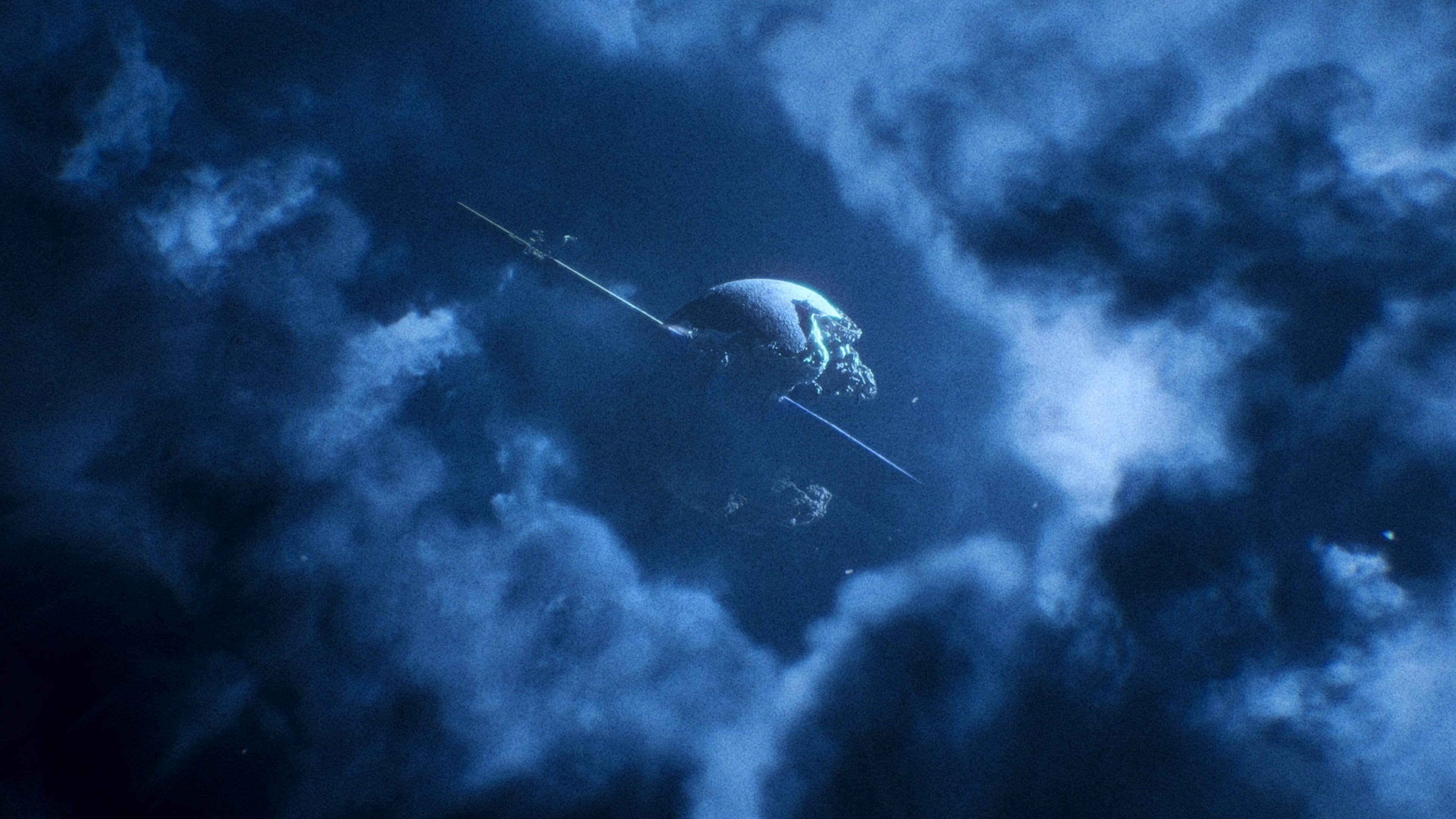
Marathon is set in the 29th century, when CEOs have all but exhausted our solar system’s profitable resources and begun looking further afield. Using Mars’s moon Deimos as a structural foundation, the Unified Earth Space Council constructed an interstellar ship (the titular Marathon, below) and sent thousands of people 12 light years away to the Tau Ceti system — a setting you may recognize from Ursula K. Le Guin’s The Dispossessed or Kim Stanley Robinson’s Aurora.
After humans establish a colony on Tau Ceti IV, something goes horrifically wrong. When Marathon begins, you play as a “runner”: an independent contractor whose consciousness has been digitized and uploaded to a server, where it can be downloaded into a synthetic, humanoid “shell.”
Armed with new cybernetic abilities, you’re tasked with investigating the abandoned colony on Tau Ceti IV and the Marathon ghost ship in orbit. As a freelancer, you can accept contract work from several conglomerates: CyberAcme (think, IBM + OpenAI), NuCaloric (Amazon + Monsanto), Traxus (Lockheed Martin + Halliburton), and Sekiguchi Genetics (Boston Dynamics + Neuralink). There’s also MIDA, an anarchist faction of UESC-resistant freedom fighters, and Arachne, a religious death cult.
The worldbuilding is fascinating. The combat is thrilling. But where Marathon really excels is its corporate satire. When Traxus offers you a contract, it deploys a devastatingly familiar dialect of legalese.
“Be advised that you are not a Traxus employee. As a temporary asset, you are not entitled to any worker protections or representation.”
—Vulcan, agent of Traxus
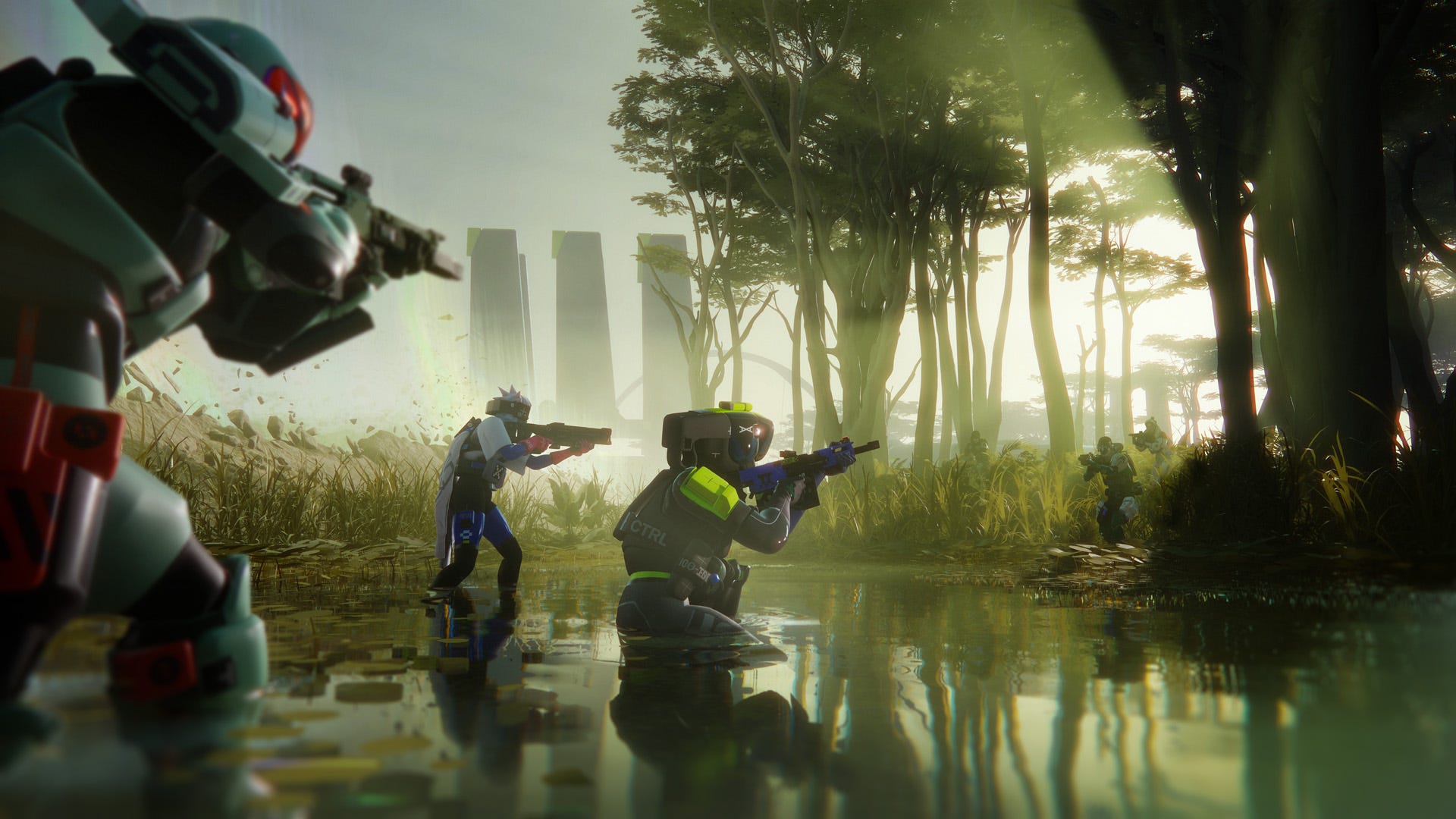
As a “runner,” your primary goals are to “extract” resources from the ruined colony of New Cascadia and kill other “runners” before they beat you to the loot — just as 21st-century corporations turn employees against each other for better wages and healthcare while CEOs make 284 times more money.
“Due to your status as an unregistered biocybernetic entity, you are disqualified from human rights and wartime cruelty protections.”
—Vulcan, agent of Traxus
There is also some nice environmental storytelling here, from the subtle (What happened to this building?) to the explicit, like messages scrawled on the walls by long-dead colonists. In the original trilogy, Marathon’s story was largely told through MS-DOS-like computer terminals hidden throughout the maps; now, completing various challenges rewards you with a similarly styled lore entry in your runner’s “codex.” Fans of cinematic storytelling a la Baldur’s Gate 3 may find this old-fashioned, but Myst, Riven, and Elden Ring are on my personal Mount Rushmore of gaming; clearly, I enjoy reading in-game prose.
Like Destiny and Destiny 2 before it, Marathon is a “live service” game that will evolve each month. Bungie says we’ll unlock “secrets” and new areas to investigate. Thus far, my favorite experiences with the game aren’t combat-related; they’re when I feel like an exoplanetary archaeologist, trying to piece the puzzle together, or when I’m smashing windows as a MIDA-aligned anarchist, sticking it to the future Man who exploits the runners.
While I’ve enjoyed my time with the game so far, whether I continue playing Marathon depends on how committed Bungie is to telling a compelling story. The epic science fiction mystery they’ve teased so far — and their tongue-in-cheek indictments of hypercapitalism — will keep me coming back more than new weapons or runner shells.
When the original Marathon debuted in 1994, its militarized cyberpunk vision of the future felt dark and dystopian. In 2026, the new Marathon feels downright chipper, and not just because of all the bright colors; it imagines a future where we survive another 900 years — and uncountable Ramesses IIs — on Earth.

Elsewhere
For Esquire, I picked the most-anticipated books of 2026.
Also at Esquire, I spoke with George Saunders about Vigil, life, and death.